
Fighting for Equality: 1950–2018
Explore the impact of Cold War ideals on women's independence and equality, and the rise of the Me Too movement and women in politics in the 2018 midterm election. This is part four of the Women Have Always Worked four-part series.
Modules/Weeks
Weekly Effort
Discipline
School
Format
Cost
Course Description
- Investigate the influence of the Cold War on suburban family ideals and its implications for women's quest for independence and equality.
- Chart the evolution of the feminist movement, highlighting significant moments from the 1960s to contemporary events, including the 2016 presidential campaign and the Me Too movement.
- Analyze the significance of the 2018 midterm election in reshaping female political representation and its broader societal implications.
- Critique the concept of equality, exploring the challenges and complexities of demanding equality while recognizing potential internal disparities within women's movements.
This is the fourth of four courses in the Women Have Always Worked series:
Course Prerequisites
Recommended for those with an undergraduate level interest in history, labor, and gender.
What You Will Learn
By the end of this course, learners will be able to:
Analyze the historical role of suburban housewives as ideological buffers against communism and the implications of this viewpoint.
Examine the evolution of women's activism, wage work, and their challenges in the lead-up to the 1960s transformative events.
Evaluate the diverse experiences of working women in a consumerist society, considering factors like class, race, and citizenship status.
Understand the factors behind the decline in women's labor force participation in the 21st century and its impact on the political landscape.
Course Outline
Module 16: The woman citizen in a Cold War world
Module 17: The meaning of freedom when gender is at issue
Module 18: The second wave in action
Module 19: The road to democracy
Module 20: Having it all
Module 21: Rethinking gender
Instructors
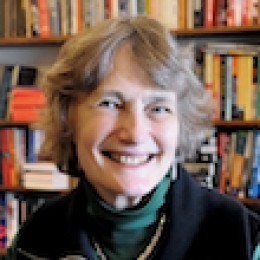
Alice Kessler-Harris is R. Gordon Hoxie Professor of American History Emerita at Columbia University where she was also Professor in the Institute for Research on Women and Gender. Professor Kessler-Harris specializes in the history of American labor and 20th-century social policy. Her books include In Pursuit of Equity: Women, Men and the Quest for Economic Citizenship in Twentieth Century America (2001), which won the Bancroft, Taft, Joan Kelly, and Herbert Hoover prizes; Gendering Labor History (2007), which contains her essays on women, work and social policy, the recently re-issued A Woman’s Wage: Historical Meanings and Social Consequences (1990), and A Difficult Woman: The Challenging Life and Times of Lillian Hellman (2012). She is perhaps best known for the classic Out to Work: A History of Wage-Earning Women in the United States (1982, 2001).
This course is based in part on the second edition of Kessler-Harris’ 1981 book, Women Have Always Worked: A Concise History, published in 2018. Professor Kessler-Harris is past president of the Organization of American Historians, the Labor and Working Class History Association, and the American Studies Association. Currently, she serves as Vice President of the Society of American Historians. She is an elected member of the American Academy of Arts and Sciences and the American Philosophical Society.

Nick Juravich earned his Ph.D. in History from Columbia University in 2017 and currently serves as the Andrew W. Mellon Foundation Postdoctoral Fellow in Women's History at New-York Historical Society. Beginning in September 2019, he will be an assistant professor of public and labor history at the University of Massachusetts Boston. Nick's first book, The Work of Education: Community-Based Educators in Schools, Communities, and the Labor Movement is under advance contract with University of Illinois Press in the Working Class in American History series. Nick is a trained oral history researcher and first interviewed Professor Kessler-Harris for the Institute for Research on Women, Gender and Sexuality at Columbia's 25th Anniversary Oral History Project.
Please note that there are no instructors or course assistants actively monitoring this course.